






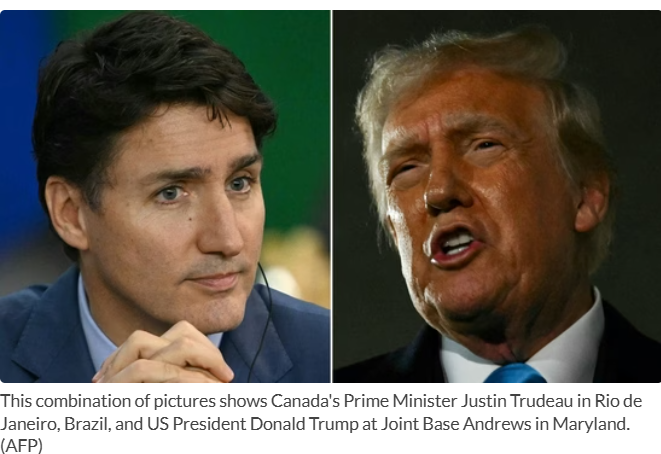
WASHINGTON/MEXICO CITY/OTTAWA, – U.S. President Donald Trump has announced a 30-day pause on proposed tariffs against Canada and Mexico following commitments from both nations to enhance border enforcement and combat drug trafficking. However, tariffs on China remain set to take effect as scheduled.
The decision to delay tariffs on America’s two largest trading partners comes after discussions between U.S., Canadian, and Mexican officials. Canadian Prime Minister Justin Trudeau and Mexican President Claudia Sheinbaum confirmed their governments would take additional measures to strengthen border security and crack down on organized crime. As a result, the 25% tariffs originally slated for implementation on Tuesday have been postponed for 30 days.
Meanwhile, the U.S. administration remains firm on imposing a 10% tariff on Chinese imports, set to begin at 12:01 a.m. ET on Tuesday (0501 GMT). A White House spokesperson indicated that President Trump does not plan to engage in discussions with Chinese President Xi Jinping until later in the week. Trump also suggested that tariffs on China could increase further if fentanyl shipments to the United States do not cease.
In response, China has stated that it will challenge the tariffs at the World Trade Organization and consider countermeasures, while also signaling a willingness to engage in negotiations. Chinese officials have described the fentanyl issue as a domestic challenge for the United States.
The temporary reprieve on Canadian and Mexican tariffs immediately impacted financial markets, with the Canadian dollar strengthening after reaching its lowest level in over two decades. U.S. stock index futures also saw gains following the announcement. Industry groups welcomed the decision, expressing relief over avoiding immediate disruptions to supply chains.
“This is very encouraging news,” said Chris Davison, head of a Canadian trade group representing canola producers. “Our industry is highly integrated across borders, benefiting all three countries.”
Despite the tariff suspension for Canada and Mexico, President Trump suggested that the European Union may be the next target for trade measures, though no specific timeline was provided. EU leaders, gathered at an informal summit in Brussels, stated that they would respond if necessary but called for diplomatic negotiations to prevent economic conflict. Trump hinted that the United Kingdom, which left the EU in 2020, might be exempt from potential U.S. tariffs.
Addressing concerns about potential economic consequences, Trump acknowledged that tariffs could lead to short-term price increases for American consumers but maintained that the measures are essential for curbing immigration, combating drug trafficking, and encouraging domestic manufacturing. According to analysts, the originally planned tariffs would have affected nearly half of all U.S. imports and could have required the U.S. to significantly expand its manufacturing capacity to offset losses in international trade.
Economists warn that without a long-term resolution, the situation could lead to economic slowdowns in Canada and Mexico, with some suggesting the risk of stagnation and inflation in the U.S. economy.
The 30-day pause offers a window for further negotiations between the North American partners, as officials work toward a broader agreement addressing trade and security concerns.