





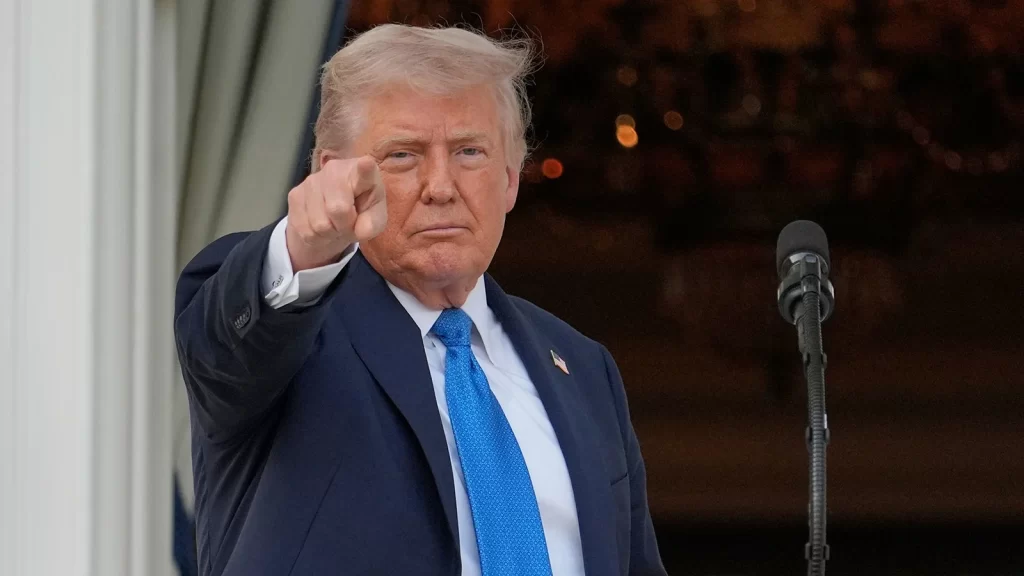
President Donald Trump has signed a new presidential proclamation imposing travel restrictions on citizens from a total of 19 countries, citing national security concerns and challenges related to immigration vetting systems.
According to the announcement, full entry bans will apply to nationals from 12 countries: Afghanistan, Myanmar (Burma), Chad, Republic of the Congo, Equatorial Guinea, Eritrea, Haiti, Iran, Libya, Somalia, Sudan, and Yemen. In addition, partial restrictions will be placed on travelers from Burundi, Cuba, Laos, Sierra Leone, Togo, Turkmenistan, and Venezuela.
The travel restrictions are set to take effect at 12:01 a.m. on June 9, as outlined by the White House.
Scope and Exceptions
The proclamation allows for specific exceptions, including lawful permanent residents, holders of existing valid visas, individuals applying under certain visa categories, and those whose travel is deemed to be in the national interest of the United States.
A senior White House official noted that while the proclamation had been under consideration for some time, a recent antisemitic attack in Boulder, Colorado, accelerated the decision to move forward.
White House Deputy Press Secretary Abigail Jackson said the proclamation was part of the administration’s broader effort to strengthen border security and improve screening processes. She emphasized that the restrictions target countries that “lack adequate identity management, exhibit high visa overstay rates, or do not adequately share security and threat-related information with U.S. authorities.”
Ongoing Assessment
In a video message released Wednesday, President Trump stated that the list of restricted countries may be revised in the future based on changes in global threats and improvements in countries’ security cooperation with the U.S.
“We will not allow people to enter our country who wish to do us harm. Nothing will stop us from keeping America safe,” the president said, adding that more countries could be added if new risks arise.
The move comes less than five months after the president began his second term in office. On his first day back, he signed an executive order directing federal agencies to identify countries with insufficient vetting procedures as candidates for travel restrictions.
Historical Context and Implications
During his first term, President Trump implemented a similar travel ban that affected several majority-Muslim countries. That policy faced legal challenges before eventually being upheld by the U.S. Supreme Court. It was later reversed by President Joe Biden in 2021.
The inclusion of Afghanistan in the current list has drawn particular attention, as many Afghans who worked with U.S. forces during the 20-year war remain in limbo. Previous executive orders have also impacted the processing of Special Immigrant Visas (SIV) and refugee resettlement for Afghans.
As with previous measures, the new travel proclamation is expected to spark both domestic and international debate over its scope, fairness, and effectiveness.