






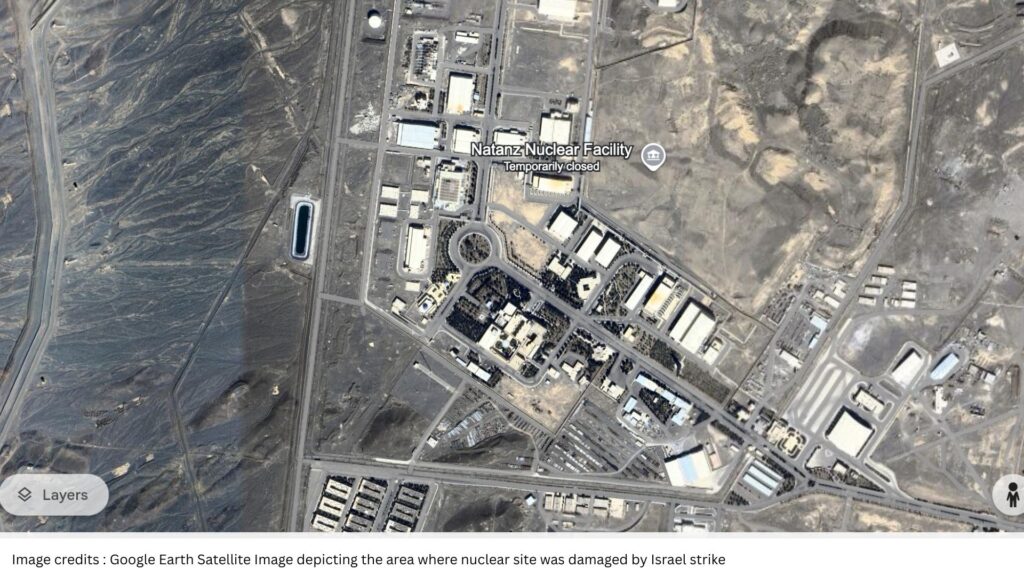
In response to a deadly Iranian missile barrage that struck Israeli civilian areas—including a hospital in Beersheba—Israel has launched a bold and calculated military operation, striking key Iranian nuclear facilities with precision missiles. The targeted sites included uranium and centrifuge infrastructure near Natanz, Arak, and Isfahan. The operation, confirmed by Israeli defense officials early Wednesday morning, marks a significant escalation in the conflict between the two longtime adversaries. Israeli Prime Minister Benjamin Netanyahu said the attacks were necessary to neutralize Iran’s growing nuclear threat, and emphasized that Israel would act unilaterally if required. “We will not wait for America’s green light to defend the State of Israel,” Netanyahu stated. “Iran’s Supreme Leader and his regime must understand that their nuclear ambitions carry a heavy price. We will act whenever and wherever necessary to protect our future.”
Satellite imagery and intelligence assessments indicate that the strikes caused substantial damage to advanced centrifuge halls at Natanz, as well as to uranium conversion infrastructure in Arak and Isfahan. While Iranian state media downplayed the incident as a “technical malfunction,” nuclear watchdogs estimate the setback could delay Iran’s program by six months or more. Netanyahu reiterated that Israel’s actions are not directed at the Iranian people themselves. “We are not at war with the Iranian people,” he affirmed. “We are at war with the regime that endangers both its own citizens and the world.”
President Donald Trump, who remains a dominant voice in American foreign policy circles, commented on the situation from Florida: “We are reviewing the situation carefully. There will be a decision within the next two weeks.” The statement suggests Washington is closely monitoring Iran’s response and may consider military or diplomatic options, though no immediate action has been confirmed.