





As Israel intensifies its military campaign against Iran with precision strikes on key nuclear facilities, global powers have begun to take sides — and two of the most prominent voices of dissent have come from Russia and China, who have united in their firm condemnation of Israel’s actions. Both governments have accused Israel of violating international law and warned that further escalation could destabilize the region and trigger broader consequences. On June 13, 2025, following the Israeli airstrikes on Iran’s Natanz, Arak, and Isfahan nuclear sites, Russia’s Foreign Ministry issued a sharp statement labeling the attack as “unprovoked” and in violation of the United Nations Charter.
Spokesman Dmitry Peskov declared: “These strikes are a dangerous and illegal use of force that undermines any remaining path toward diplomacy. We call on all parties to show restraint, but especially those taking unilateral military action.” Later, on June 17, Deputy Foreign Minister Sergei Ryabkov raised the stakes, warning of a potential “nuclear catastrophe” if military activity continued near Iran’s sensitive facilities.
“The international community cannot allow reckless attacks that might cause radioactive leaks or damage.
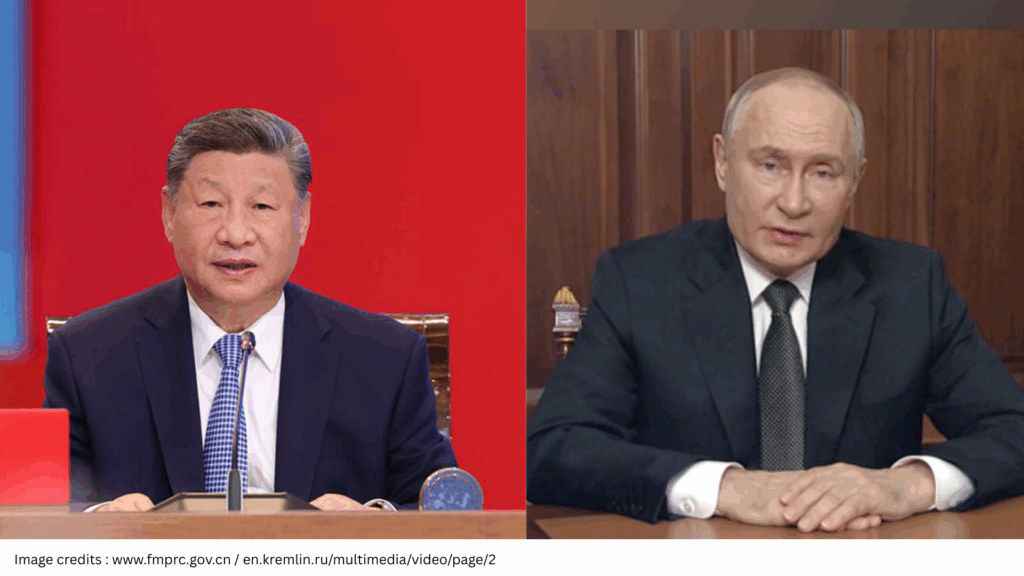
China’s reaction was equally forceful. On June 14, 2025, at an emergency session of the UN Security Council, China’s ambassador Fu Cong said: “Israel must immediately stop all risky military action and return to the framework of international diplomacy. These actions threaten not only regional security but global stability.” China also took swift action to protect its nationals in the region. On June 19, the Chinese Foreign Ministry confirmed the evacuation of over 1,600 citizens from Iran and hundreds from Israel, citing escalating security risks. “China calls for maximum restraint. We urge all countries, including Israel, to resolve disputes through dialogue and not force.” That same day, President Xi Jinping spoke with Russian President Vladimir Putin, where both leaders jointly condemned the Israeli strikes and agreed to support de-escalation through the UN and regional diplomacy channels.